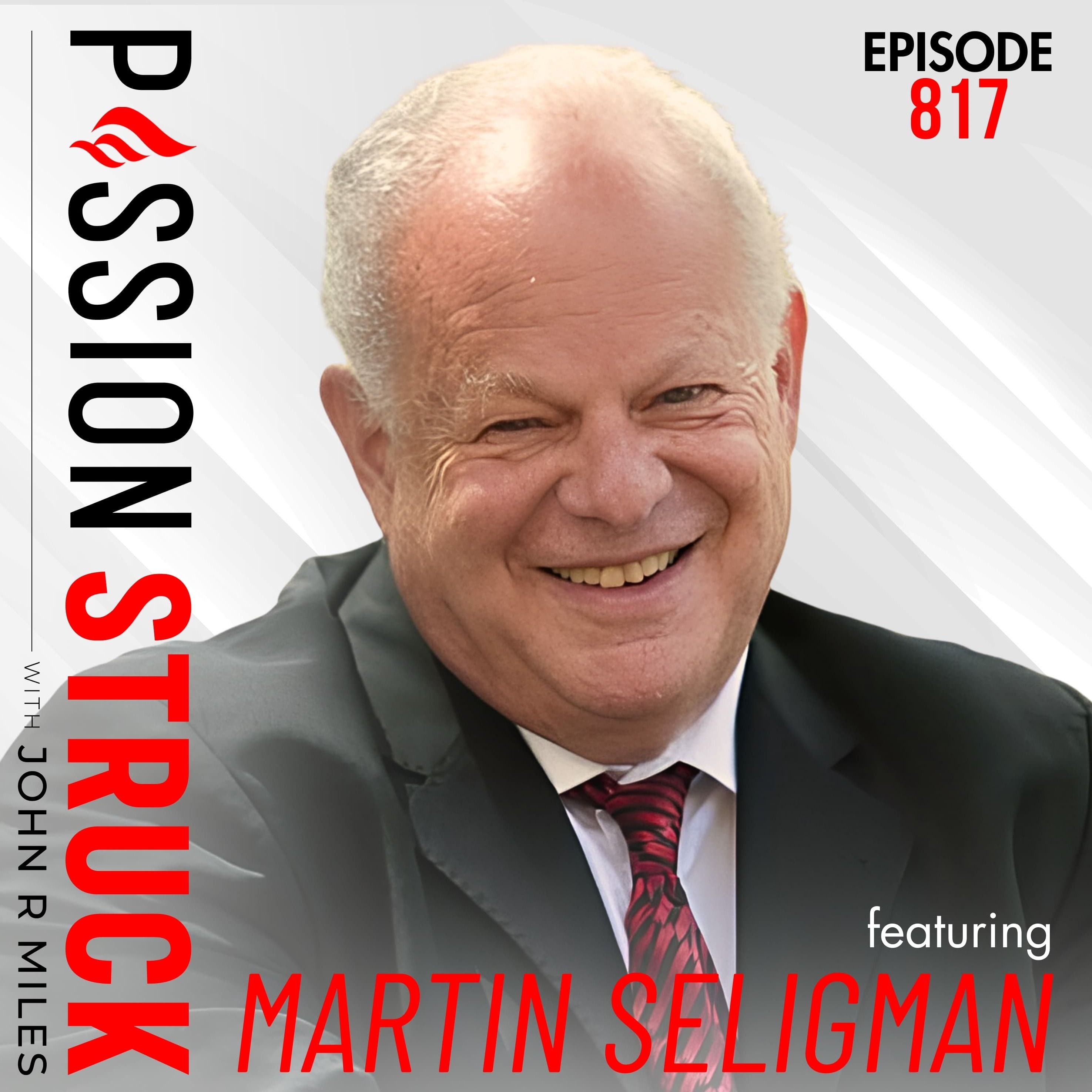
World’s Most Influential Psychologist: The Hidden Force That Drives Human Progress | Dr. Martin Seligman – EP 817
Have you ever reached a point where you stopped believing that what you do could actually make a difference? Maybe you tried harder. Maybe you kept showing up. But after enough setbacks, rejection, or disappointment, something inside you started asking, "Why bother?" Today, John R. Miles sits down with Dr. Martin Seligman, one of the most influential psychologists of our time and a pioneer of positive psychology. For more than six decades, Seligman has studied learned helplessness, optimism, resilience, and human flourishing. His new book, Agency: The Psychological History of Human Progress, brings that work to a much bigger question: What makes individuals—and entire civilizations—believe they can shape the future? Seligman explains that agency is built from three capacities: efficacy, optimism, and imagination. Together, they give us the ability not only to believe that we can act but also to envision a future worth acting toward. But this conversation goes far beyond individual psychology. John and Marty explore what happens when agency becomes collective, why societies need to balance “I can” with “we can,” and how mattering and agency may be connected. Marty argues that our actions begin shaping our sense of self through the responses we receive from other people and the world around us. When our actions repeatedly produce no response, learned helplessness can take hold. They also take the conversation into the future of AI, education, creativity, and human possibility. Seligman describes how AI is already allowing him to test ideas that once would have taken years to investigate—and why he believes the technology could become an extraordinary amplifier of human agency. In this episode, you’ll learn: Why Seligman believes agency—not just happiness—is central to human flourishing How learned helplessness became the foundation for his lifelong study of human agency The three psychological capacities that make up agency: efficacy, optimism, and imagination Why some people stop acting when their efforts repeatedly fail to produce a response How agency and mattering may reinforce one another Why the future may depend on balancing “I can” with “we can” What ancient civilizations can teach us about the psychology of human progress How AI is changing the way Seligman conducts research and thinks about creativity Why education may need to shift from teaching children to be “smart” toward character, leadership, kindness, cooperation, and flourishing What Seligman hopes his grandchildren—and future generations—will believe about human possibility This is ultimately a conversation about one of the most important questions we can ask ourselves: Do I believe that what I do can make a difference? Because agency doesn't mean believing you control everything. It means believing that your actions still matter.